How to Stay Fit on Business Trips (Without Losing Your Mind or Your Routine)
Here’s something nobody warns you about before your first big business trip: the hardest part isn’t the meetings, the jet lag, or even the expense reports. It’s watching your fitness routine completely fall apart the moment you leave home — and not knowing how to get it back.
If you’ve ever returned from a work trip feeling sluggish, bloated, and somehow exhausted despite sleeping in a nice hotel bed, you already know what I’m talking about. Knowing how to stay fit on business trips is genuinely one of the most underrated travel skills you can develop.
The good news? It’s way more manageable than most people think — and you don’t need a hotel gym, a meal prep service, or superhuman willpower to pull it off.
The Shift: What Most People Get Wrong About Staying Fit While Travelling
Most people treat fitness on business trips as an all-or-nothing deal. Either you stick to your full workout program and eat perfectly, or you throw your hands up and “restart on Monday.” That black-and-white thinking is exactly why so many travellers come home feeling worse than when they left.
Experienced business travellers know something different: consistency beats perfection every single time. A 20-minute bodyweight workout in your hotel room beats zero workouts every day of the week. A decent breakfast from the hotel buffet beats skipping meals because the restaurant didn’t have your go-to protein shake.
The goal isn’t to replicate your home routine. The goal is to stay in the game — moving your body, fuelling it reasonably well, and protecting your sleep. Do those three things and you’ll land back home feeling like a functioning human being instead of a crumpled receipt.
The Framework: How to Actually Stay Fit on Business Trips
1. Build a Portable Workout System You Can Do Anywhere
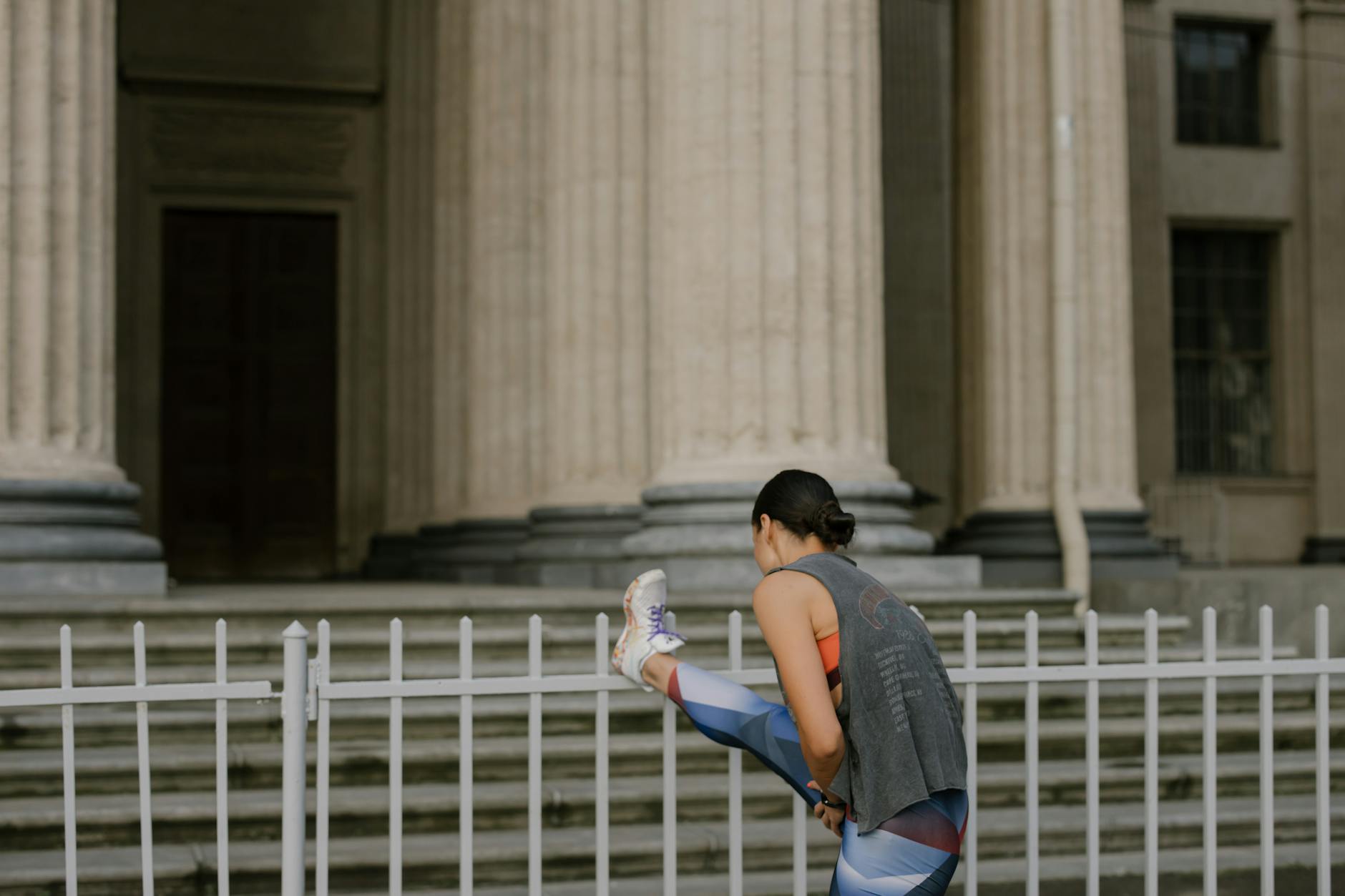
The number one excuse for skipping workouts on the road is “the hotel gym was terrible.” Valid. Hotel gyms are often terrible. But here’s the thing — you don’t need one.
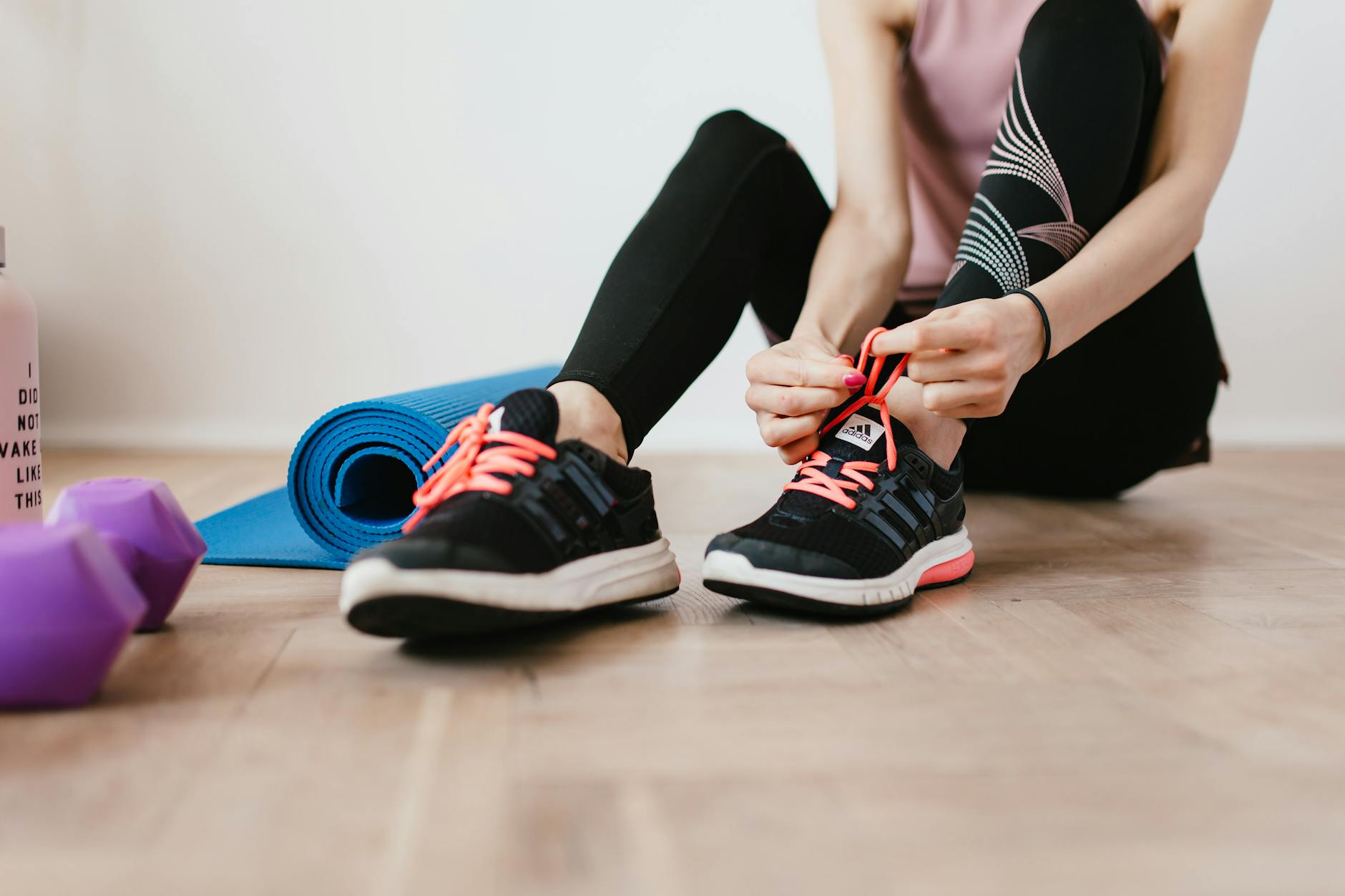
A simple bodyweight routine that takes 20–30 minutes requires zero equipment, zero gym access, and about six feet of floor space. That’s it. Push-ups, squats, lunges, planks, mountain climbers — done in a circuit, they’ll raise your heart rate, maintain your strength, and clear your head before a long day of meetings.
If you prefer something more structured, resistance bands are lightweight, pack flat, and can turn any hotel room into a functional gym. They weigh almost nothing and take up virtually no space in your bag.
Apply it immediately: Before your next trip, write down three 20-minute workouts you can do without any equipment. Save them in your phone. That’s your travel fitness plan — done.
Common resistance: “I’m too tired after a full day of meetings.” Fair enough. Flip the script and work out in the morning, before your schedule takes over. Even 15 minutes before breakfast counts.
2. Protect Your Sleep Like It’s a Business Asset
Sleep is the most overlooked fitness tool in every business traveller’s kit. When you’re short on sleep, your body craves sugar and carbs, your willpower tanks, and your motivation to move drops to almost zero. Bad sleep creates a chain reaction that wrecks your entire wellness routine.
Jet lag, unfamiliar beds, and late-night client dinners all conspire against you. But there are a few things you can control. Keep your sleep schedule as close to home as possible. Avoid alcohol close to bedtime (it fragments your sleep). Bring a sleep mask and earplugs — they’re small, they’re cheap, and they make a real difference in a noisy hotel.
Apply it immediately: Pack a sleep mask on your next trip. It takes up zero space and costs next to nothing. If you’re travelling across time zones, try to get morning sunlight on arrival day to reset your circadian rhythm faster.
3. Eat Strategically, Not Perfectly

Business travel is a dietary minefield. Airport food, client lunches, conference room snacks, hotel minibar temptations at 11pm — it adds up fast.
The trick isn’t to eat perfectly. It’s to make one good decision per meal instead of trying to overhaul your entire diet while on the road. Choose the grilled option instead of the fried one. Add a salad. Drink water before your meal. These are tiny choices that compound over a four-day trip.
Packing a few smart snacks from home — a handful of nuts, a protein bar, some jerky — gives you a buffer when the airport food hall has nothing reasonable to offer. You’re less likely to grab a bag of chips at the gate when you’ve already got something in your bag.
Apply it immediately: Before your next trip, pack three portable snacks. Put them in a small pouch in your carry-on so they’re easy to grab. That’s it.
Common resistance: “I have client dinners every night.” You don’t have to skip the dinner or order a sad salad while everyone else orders steak. Enjoy the meal — just drink water between drinks, skip the bread basket, and stop when you’re full. Nobody is watching as closely as you think.
4. Move More Between Meetings
You don’t have to carve out a full workout block to stay active on business trips. Small movement habits throughout the day add up to something real.
Walk to meetings instead of taking a cab when it’s feasible. Take the stairs. Get up from the conference table and walk to the window during breaks. If your hotel is in a walkable area, take a 15-minute walk after dinner instead of heading straight back to your room.
None of these things feel like “exercise.” But collectively, they keep your body from going completely dormant over a multi-day trip — and that matters more than you’d think.
Apply it immediately: Set a phone reminder for every two hours during your work day on the road. When it goes off, stand up and walk for five minutes. That’s 20–30 minutes of movement you weren’t getting before.
5. Pack Smart So Fitness Gear Actually Makes It Into Your Bag
Here’s an honest truth: if your fitness gear is crammed into a disorganised bag, you’ll forget it or skip it. Organisation is the difference between gear that gets used and gear that stays buried at the bottom of your suitcase.
This is where packing strategy actually connects to fitness. When your bag is well-organised — clothes grouped together, gear easy to find, space used efficiently — you’re more likely to actually use what you packed. A set of compressible packing cubes keeps your workout clothes separate from your work clothes, so there’s no excuse to “not find them” at 6am.
Packing light also means you move more freely through airports and cities. When your bag isn’t a burden, you’re more likely to walk instead of cab, take stairs instead of escalators, and generally stay more active throughout the trip. Lighter travel is, in a weird way, a fitness choice.
If you’re the type who picks up a bottle of local wine at a business dinner (no judgment — it’s a legitimate networking move), a protective wine sleeve in your bag means you can bring it home safely without stressing your packing job. And before you head to the airport, a mobile travel scale takes the guesswork out of whether your bag is within the weight limit — so you’re not repacking at the check-in counter at 5am.
For a deeper look at how your itinerary should shape what you pack, check out How to Pack Based on Your Itinerary — it’s a practical system that makes packing for any trip faster and smarter.
Reflection Prompts
Take a minute to think through these before your next trip. They’ll help you build a routine that actually fits your travel style:
- What’s the one fitness habit from home that you most want to protect when you travel?
- What time of day are you most likely to actually exercise on a work trip — morning, midday, or evening?
- Where does your routine most often fall apart — sleep, eating, movement, or all three?
- What’s one small change to your packing system that would make it easier to bring your workout gear?
- If you could only do one thing to stay fit on your next trip, what would have the biggest impact?
Small Wins: Easy First Steps to Build Momentum

You don’t have to overhaul everything at once. Start here:
- Save one 20-minute bodyweight workout to your phone before your next trip departs.
- Pack a sleep mask and one pair of earplugs — even if you don’t think you’ll need them.
- Add three portable snacks to your packing list right now.
- Walk for 10 minutes after your first dinner on the road, no matter how tired you are.
- Set a 2-hour movement reminder on your phone for your first day of meetings.
None of these feel like a big deal. That’s exactly the point. Small wins stack up, and after a few trips, they become habits you don’t have to think about anymore.
💼 Better Travels Tip
The best travel fitness plan is the simplest one. A 20-minute routine you’ll actually do beats a 90-minute plan you’ll skip every time. Design your on-the-road routine around what’s realistic — not what’s ideal. Then pack for it intentionally: keep your workout clothes accessible, your snacks within reach, and your bag light enough that you want to move through the world instead of drag yourself through it.
Better gear, simpler trips.
Conclusion: The Business Trip Doesn’t Have to Win
Knowing how to stay fit on business trips isn’t about being a fitness hero in a hotel gym at midnight. It’s about building a handful of simple habits that keep you feeling good, thinking clearly, and showing up as your best self — even when you’re three time zones from home and running on conference room coffee.
Move a little every day. Sleep like it matters (because it does). Eat reasonably well without making it a whole thing. And pack smart enough that your fitness gear is actually accessible when you need it.
The road doesn’t have to derail you. With the right approach, it becomes just another place where your routine — a simpler, leaner version of it — travels right along with you.
Ready to make your next trip better planned from the start? Check out Minimalist Travel Planning Guide for a no-fuss approach to planning trips that leave room for the things that actually matter.
Pack once, travel twice.
About the Author

Alex W.
Alex has been writing about travel logistics since 2019, with a focus on packing strategy and carry-on-only travel. When he’s not optimizing his airport routine, he’s probably repacking his bag for the third time this week.
