How to Keep Kids Engaged at Museums and Attractions (Without Losing Your Mind)
You planned the perfect family trip. You booked the tickets, packed the bags, and got everyone excited for a big day at the museum. Then, about 20 minutes in, someone is hungry, someone is bored, and someone is lying on the floor next to a priceless artifact. Sound familiar? Knowing how to keep kids engaged at museums and attractions is one of those skills nobody teaches you — but every travelling parent desperately needs.
The good news? It’s not about finding the perfect museum or spending more money. It’s about a few simple strategies that turn passive sightseeing into something kids actually want to do. This guide walks you through exactly that.
What to Know Before You Go
Before we get into the list, here’s the honest truth: kids don’t disengage because museums are boring. They disengage because they feel like passive observers. Adults read the plaques. Adults decide where to go next. Adults set the pace. Kids just follow along — and that gets old fast.
The strategies below work because they flip that script. They give kids ownership, agency, and a reason to pay attention. Whether you’re visiting a natural history museum, an aquarium, a science centre, or an art gallery, these tips apply across the board.
One more thing to set expectations: the age range matters. A five-year-old and a twelve-year-old need different approaches. Where possible, I’ve flagged which tips work best for which age group.
How to Keep Kids Engaged at Museums and Attractions: 10 Strategies That Actually Work
1. Give Them a Mission Before You Walk In
Kids thrive with a purpose. Before you enter, give each child a simple mission. It could be “find three animals that live in the ocean” or “spot something that’s older than great-grandma.” This frames the visit as a challenge rather than a tour.
Best for: Ages 4–12
Actionable tip: Write their mission on a small notepad or let them keep a running list on your phone. At the end of the visit, review what they found together over a snack.
2. Let Them Lead (At Least for One Section)

Pick one gallery or section and hand over full control. Your child decides where to go, what to look at, and how long to stay. You follow their lead — no redirecting, no rushing.
Best for: Ages 6 and up
Actionable tip: Give them a map at the entrance and let them circle the one section they most want to explore. It builds excitement and gives them something to look forward to from the moment you arrive.
3. Ask Questions Instead of Giving Answers
Instead of reading the exhibit label out loud and explaining it, try asking your child what they think first. “Why do you think this dinosaur was so big?” or “What do you think this tool was used for?” works better than a lecture every time.
Best for: All ages
Actionable tip: Follow up their answer with “What makes you think that?” It deepens engagement and keeps the conversation going without you doing all the work.
4. Pack a Small Activity Bag
Not every moment at a museum is high-stimulation. There are long walks between exhibits, queues, and rest stops. A small activity bag — crayons, a sketchpad, a few sticker sheets — bridges those gaps without pulling out a screen.
Best for: Ages 3–9
Actionable tip: Make it a habit to pack a “museum kit” in a small pouch. Keep it in your day bag so it’s always ready. If you’re already using Better Travels Compressible Packing Cubes for your trip, a small cube works perfectly as a dedicated kids’ activity organizer — it compresses flat when empty and expands when you need it.
5. Connect Exhibits to Things They Already Love

Does your kid love dinosaurs, space, Minecraft, or sharks? Find the connection between what they already care about and what’s in front of them. A geology display becomes a “mining” adventure. A Roman history exhibit becomes ancient warriors. The exhibit doesn’t change — your framing does.
Best for: All ages
Actionable tip: Before the trip, spend five minutes on the museum’s website together and let your child find one exhibit that connects to something they’re into. That exhibit becomes the anchor for the whole visit.
6. Use the Museum’s Own Kids’ Programs
Most major museums offer self-guided activity sheets, scavenger hunts, or hands-on workshops — and parents almost always overlook them. Ask at the front desk when you arrive. These programs are designed specifically to keep kids engaged at museums and attractions, and they’re usually free with admission.
Best for: Ages 5–13
Actionable tip: Check the museum’s website before you go and book any hands-on workshops in advance. They fill up fast, especially on weekends and school holidays.
7. Build in Real Breaks
One of the biggest mistakes parents make is trying to see everything in one shot. Kids — especially under ten — need breaks every 45 to 60 minutes. A snack, a sit-down, a few minutes of running around outside resets their attention span completely.
Best for: All ages, especially under 8
Actionable tip: Plan your visit in chunks with breaks built in, not as an afterthought. Two good hours beats three exhausted ones every time.
8. Bring a Camera or Let Them Use Yours
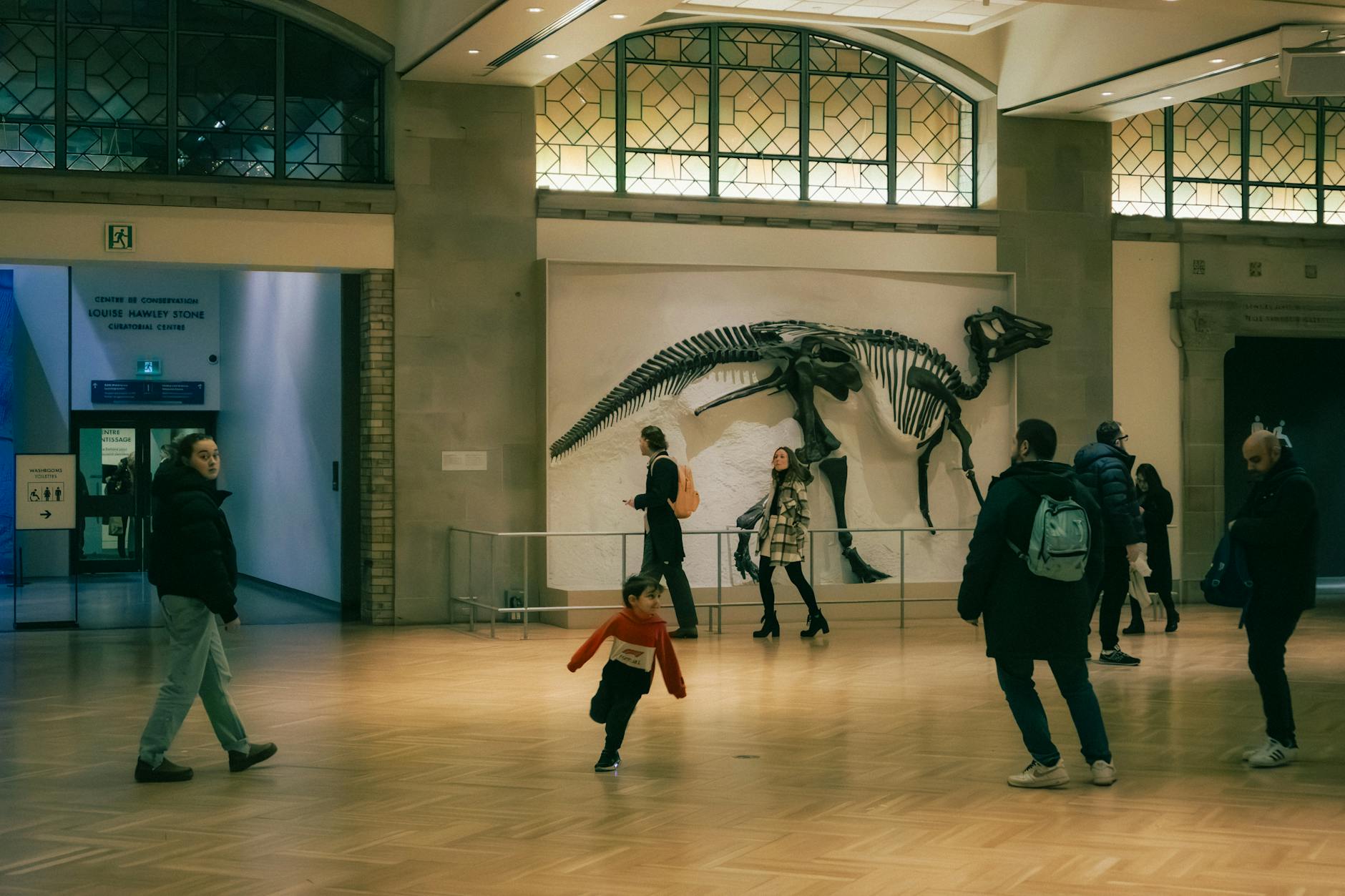
Give your child the job of “trip photographer.” Their mission is to photograph the five most interesting things they see. This changes everything — suddenly they’re actively looking, making decisions, and building a personal record of the visit.
Best for: Ages 7 and up
Actionable tip: Review the photos together at the end of the day and ask them to explain why they chose each one. It’s a great way to extend the experience and hear what actually caught their attention.
9. Turn the Gift Shop into a Learning Moment
The gift shop meltdown is a rite of passage for travelling families. Head it off by setting expectations before you go in: one item, within a set budget, that connects to something they learned that day. This makes the gift shop part of the experience rather than a sugar-rush detour at the end.
Best for: Ages 4–11
Actionable tip: Ask them to explain why the item they want connects to what they saw. You’ll be surprised how much they actually absorbed — and it makes the purchase feel earned.
10. Debrief on the Way Home
The ride or walk back to the hotel is underrated family time. Ask each person to share their favourite exhibit, something that surprised them, and one question they still have. It cements the memory and keeps the conversation alive long after you’ve left the building.
Best for: All ages
Actionable tip: Make it a game: whoever asks the most interesting “I wonder why…” question wins a small reward. Kids who ask good questions are kids who were paying attention.
Quick-Reference Table: Strategies at a Glance

StrategyBest For (Age)Effort LevelOur TakeGive Them a Mission4–12LowEasy win — works almost every timeLet Them Lead6+LowBuilds confidence and buy-inAsk Questions FirstAll agesLowSimple habit, big differencePack an Activity Bag3–9MediumSaves you during slow momentsConnect to Their InterestsAll agesLowTakes 5 minutes to prep, pays off all dayUse Museum Programs5–13LowOften overlooked, always worth itBuild in Real BreaksAll agesLowNon-negotiable for under-8sCamera Job7+LowTurns passive into active instantlyGift Shop Strategy4–11LowPrevents meltdowns, reinforces learningDebrief on the Way HomeAll agesLowExtends the experience past the exit
How We Chose These Strategies
These aren’t tips pulled from a parenting textbook. They’re based on what travelling families actually report working — gathered from travel forums, family travel blogs, educator input, and real-world feedback from parents who’ve done the museum circuit more than once.
The selection criteria were simple:
- Does it require little to no extra cost?
- Can any parent do it without special preparation?
- Does it work across different types of attractions — not just one kind of museum?
- Is it something kids actually respond to, not just something that sounds good in theory?
Every strategy on this list clears all four bars. None of them require you to be a trained educator or a professional trip planner. They just require a little intention before you walk through the door.
Better Travels Tip
Pack light, stay flexible. Family museum days go sideways when you’re weighed down by an overstuffed bag. Keep your day bag lean — snacks, a water bottle, a small activity kit, and the essentials. If you’re travelling with checked luggage, knowing your bag weight before the airport removes one more stress point from the day. The Better Travels Mobile Travel Scale takes seconds to use and means you’re never caught off guard at the check-in counter. Fewer worries at the airport means more energy for the actual trip.
Better gear, simpler trips.
Putting It All Together: Top Picks for Different Families
Not every family is the same, so here’s a quick breakdown of where to start based on your situation:
If you have toddlers and young kids (under 6): Focus on building in real breaks and packing a small activity bag. Manage expectations — short and sweet beats long and exhausting every time. The goal at this age is positive associations with the experience, not comprehensive learning.
If you have school-age kids (6–12): The mission strategy and the camera job are your two best tools. Both give kids agency and a reason to stay engaged throughout the whole visit. Combine them with the debrief on the way home and you’ve got a full framework.
If you have tweens and teens: Let them lead more. Give them real responsibility — planning the route, researching one exhibit in advance, explaining something to a younger sibling. Teens disengage when they feel talked at. They engage when they feel respected.
Knowing how to keep kids engaged at museums and attractions isn’t about finding the perfect venue — it’s about showing up with the right approach. A little preparation and a willingness to follow your kids’ lead goes further than any perfectly curated itinerary.
If you’re still in the planning phase, How to Build a No-Stress Travel Itinerary is a great next read — it walks through how to structure a family trip day by day without overloading your schedule. And if you want a full planning toolkit before you go, check out The Ultimate Travel Planning Checklist to make sure nothing gets missed.
The best museum visit your family has ever had might just be the next one — if you walk in with a plan.



About the Author

Alex W.
Alex has been writing about travel logistics since 2019, with a focus on packing strategy and carry-on-only travel. When he’s not optimizing his airport routine, he’s probably repacking his bag for the third time this week.
